

What your mushroom coffee actually costs per cup
Most people don't have an energy problem. They have a crash problem. And the fix isn't a stronger coffee.
Mushroom coffee and functional drinks in the UK work out anywhere from around 40p to £1.60 a cup. That is a four-fold spread for products that look almost identical on a shelf, and the brand with the lowest price on the packet is often not the cheapest per cup. Three numbers explain nearly all of it: cost per serving, cost per 1,000mg of active ingredient, and caffeine content. Here is how to work out each one in about two minutes.
Why the shelf price misleads
Nothing in this category is standardised. Pack sizes range from 240g tubs to 250g bags to boxes of sachets, and servings per pack run from roughly 16 to 30. Two products at £30 can be 30p apart per cup.
Cost per serving = pack price ÷ servings per pack.
Servings per pack is on the label. If a brand doesn't state it, that is worth noticing on its own, it usually means the serving size is flexible, which makes the dose flexible too.
The number almost nobody calculates
Cost per serving still doesn't tell you what you are buying, because serving sizes carry wildly different doses. A 1,000mg serving at 40p and a 400mg serving at 80p look like the cheap option and the premium option. Per milligram, one is five times the price of the other.
Cost per 1,000mg = (cost per serving ÷ mg per serving) × 1,000.
To run that calculation you need the milligrams stated per ingredient. Plenty of blends don't give you that, they list a total for a "proprietary blend", which tells you the combined weight of everything without telling you how much of any single ingredient you are getting. In practice that usually means the ingredient on the front of the pack is the smallest part of the mix.
If you cannot do this calculation from the label, that is the answer to your question.
The caffeine number, which never appears in a price table
Most products sold as mushroom coffee are coffee blends. Typical caffeine content sits around 40 to 60mg per serving, roughly half an espresso. Some brands describe their product as reduced-caffeine, which is a reduction, not a removal.
This matters more than price if your reason for buying is getting off caffeine. A reduced caffeine product and a caffeine-free one sit next to each other in every roundup and are not the same purchase. If you are still taking 50mg at 4pm, roughly half of it is still in you at bedtime, caffeine's half-life is around five to six hours.
Check for a figure in milligrams. A percentage claim like "80% less caffeine" is a comparison to an unstated baseline, not a measurement.
You can work out what your current intake leaves in your system at bedtime with our caffeine calculator.
The subscription gap
Almost every brand in this category quotes its subscription price in marketing. Discounts of 30-45% are common, which means the number you remember from an ad can be nearly double when you buy a single pack, or when you pause.
Three questions worth asking before you commit:
- What does the price revert to if I pause or cancel?
- Is the discount introductory or ongoing?
- Does anything improve the longer I stay, or is the price simply the price?
That last one is worth more than it sounds. Most subscriptions in this category are a discount and nothing else, so the value is fixed from day one and there is no reason to stay beyond convenience.
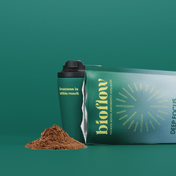
Bioflow has a milestone program, so you get free gifts with each refill order, throughout the year. Gifts vary based on promotion, but you will always see what you get in your account.
Worked example
Deep Focus Brew, so you can see the calculation run end to end:
- Cost per serving: £29.99 on subscription, £49.99 one-off
- Actives per serving: [3950mg of: Lion's Mane, Cordyceps, Bacopa Monnieri, Maitake, each stated individually]
- Cost per serving: £0.99
- Caffeine: 0mg
- Third-party tested: yes, by Eurofins
Run the same three calculations on whatever you are drinking now. If you cannot complete them from the label, that tells you something the price never will.
The five-point label check
- Milligrams stated per ingredient, not as a blend total
- Servings per pack stated clearly
- Fruiting body or mycelium, and whether the label says which
- Caffeine content in milligrams, not as a percentage claim
- A third-party lab test you can actually see
Last updated 9 Sep 2026
Ellis Achim is the founder of Bioflow. He writes about what we're building, what we get wrong, and what the research actually supports.
Bioflow team July 2026
The Journal, every other Friday
What we're building, and what the research actually says.